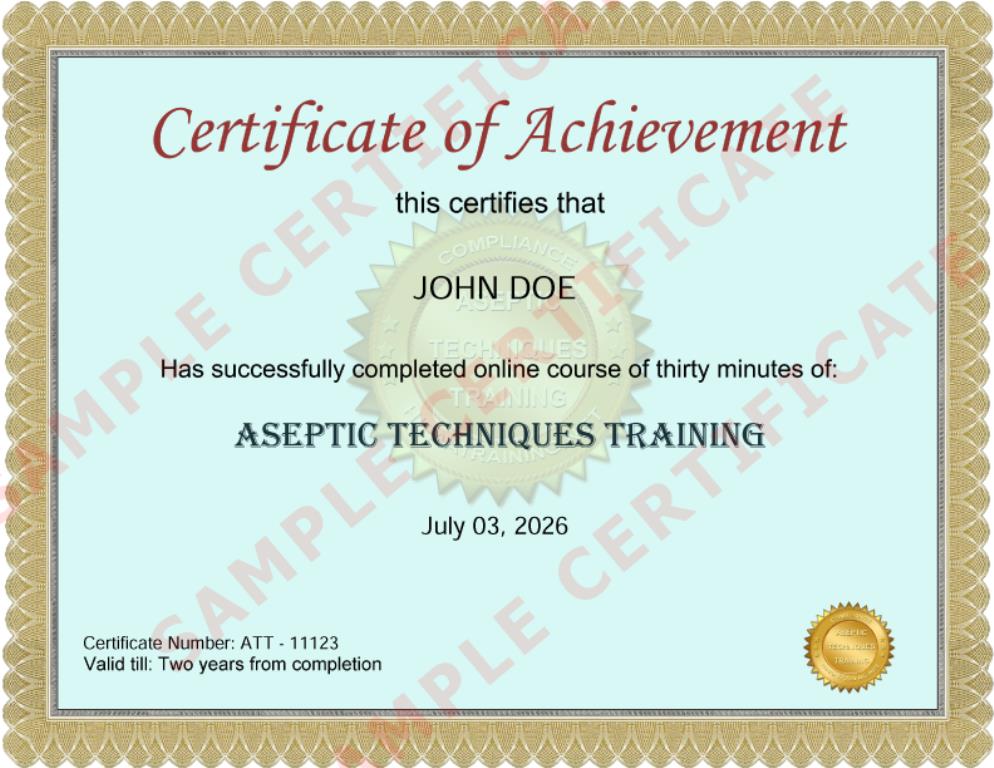
Aseptic Techniques Training provides structured instruction on maintaining sterile conditions during medical procedures. It covers:
Proper hand hygiene
Use of sterile gloves and gowns
Equipment sterilization
Safe injection practices
Contamination prevention strategies
Healthcare facilities rely on aseptic techniques to reduce infection risk and protect patients.
Prevent HAIs & Protect Patients with Evidence-Based Skills
In healthcare, one small lapse can change a patient’s life forever. According to the CDC, nearly 1 in 31 hospitalized patients has at least one healthcare-associated infection (HAI) on any given day – that’s over 722,000 infections annually in the U.S. alone. The good news? The majority of CLABSIs, CAUTIs, SSIs, and other preventable infections can be stopped with consistent, correct aseptic technique.
Our comprehensive Aseptic Techniques Training (based on the latest CDC, OSHA, AORN, and APIC guidelines) gives nurses, physicians, surgical teams, and all clinical staff the knowledge, skills, and confidence to break the chain of infection-every shift, every procedure, every patient.
Why This Aseptic Technique Course is Different (and Better)
30-minute, high-retention format (perfect for annual competency or new-hire onboarding)
Real-world case studies of CLABSI, CAUTI, and SSI events that actually happened—and how they were prevented afterward
Step-by-step skill demonstrations: hand hygiene, PPE donning/doffing, sterile field setup, central line insertion, urinary catheter care, wound dressing changes, and more
Focus on professional courage: how to speak up (respectfully and immediately) when you see a breach—even if it’s a senior colleague
Updated for 2025 standards including maximal barrier precautions, alcohol-based hand rub limitations, hub scrubbing timing, and single-dose vial best practices
Physicians, PAs, and Nurse Practitioners who place lines or perform procedures
Surgical technologists and operating room teams
Infection preventionists and quality teams
Any healthcare professional required to complete annual infection control/aseptic technique competency
Key Learning Objectives (7 Total)
Master the Chain of Infection and exactly how aseptic technique breaks every link
Perform flawless hand hygiene (soap-and-water vs. ABHR) and PPE selection/donning/doffing
Set up and maintain an unbreakable sterile field
Apply strict aseptic (and sterile when required) technique to high-risk procedures: → Central line insertion & maintenance → Peripheral IV starts → Urinary catheter insertion & care → Wound dressing changes → Injections and medication vial access
Recognize contamination events in real time and know the exact corrective actions
Build the confidence to stop the line and speak up for patient safety
Stay current as guidelines evolve (CDC, Joint Commission, CMS requirements)
What You’ll Learn – Module Breakdown
Module 1 – Fundamentals & Infection Prevention The “why” behind every action: chain of infection, HAI statistics, regulatory standards, high-risk procedures.
Module 2 – Hand Hygiene & PPE Mastery The single most effective intervention in healthcare + correct glove removal to prevent self-contamination.
Module 3 – Environmental Control & Sterile Field Management How dust, air currents, and foot traffic contaminate fields—and how to stop it before it happens.
Module 4 – Procedure-Specific Aseptic Technique + Real Case Studies Watch actual breaches that caused CLABSIs, CAUTIs, and SSIs, then see the system fixes that dropped infection rates dramatically.
Proven Outcomes from Hospitals Using This Exact Training
CLABSI rates reduced from 4.2 → 1.1 per 1,000 catheter days
CAUTI rates cut from 6.8 → 2.1 per 1,000 catheter days
Average urinary catheter duration reduced by 50%
Zero tolerance culture: 100% of staff empowered to speak up
Course Overview:
Total Course Duration: 30 minutes
Audio: Yes
Number of Total Slides: 41 slides
Online course login expires in: 2 months from receiving the login details. You will not have access to online content after you complete the course.
Certificate valid for: 2 Years
Type of License: One user license cannot be transferred after login is assigned.