
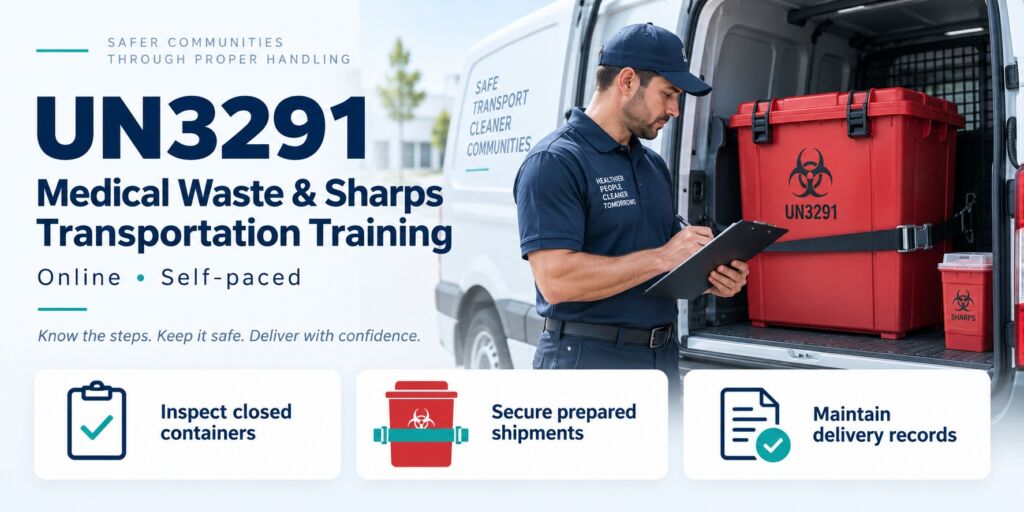
 Medical waste transportation requires careful decisions before a container enters the vehicle. A damaged closure, leaking package, or protruding needle can expose workers and others to contaminated materials.
HIPAA Training offers this online course for personnel transporting prepared regulated medical waste and sharps shipments by highway. Learners review how to check closed containers, recognize unsafe conditions, protect shipment records, and complete an authorized delivery.
Price: $25
Format: Online, self-paced
Course length: 50 Minutes
Assessment: 10 questions; 80% passing score
Certificate: Downloadable PDF course completion certificate
Course Access: 2 months or course completion, whichever comes first. No access after course is completed.
Designed for: Drivers and handlers assigned to prepared UN3291 shipments
Course focus: Transportation duties involving closed, prepared containers
What is UN3291?
UN3291 is a transportation identification number associated with certain regulated medical waste in Division 6.2. Depending on the material and applicable requirements, these shipments may include contaminated medical supplies, laboratory waste, and used sharps sent for treatment or disposal.
Not every item discarded by a healthcare facility is UN3291. A trained, authorized person must determine the classification and prepare the shipment. Drivers should not classify waste based only on a red bag, biohazard symbol, or facility name.
What does this course cover?
This course focuses on the transportation responsibilities of personnel receiving waste that has already been classified and packaged.
Topics include:
- UN3291 identification and shipment information
- Exterior container checks and closure condition
- Sharps hazards and puncture prevention
- Required marks, labels, and documents
- Loading and container securement
- Delivery records and applicable manifests
- Leaks, damaged containers, and possible exposure
- Employer procedures and transportation role limits
What will you learn?
After completing the course, you should be able to:
- Distinguish regulated medical waste from patient specimen shipments
- Recognize container conditions that require review before pickup
- Check prepared shipments without opening them
- Follow assigned loading and securement instructions
- Maintain required shipment and custody records
- Verify the approved receiving location
- Report damage, missing containers, loose sharps, and possible exposure
- Identify tasks that require separate training and authorization
What should be checked before accepting a shipment?
Follow the employer’s acceptance procedure. Check that containers are closed, appear intact, and match the pickup assignment.
Look for warning signs such as:
- Visible leakage or exterior contamination
- Broken lids, latches, or closures
- Sharps protruding from a container
- Contents above the sharps-container fill line
- Missing or conflicting shipment information
- A load that cannot be secured safely
If a concern is found, pause the pickup and contact the designated supervisor or shipper. Do not compress waste, force a container closed, or attempt an improvised repair.
Why do sharps containers need special attention?
Used needles, scalpels, and contaminated broken glass can penetrate skin or packaging. Sharps containers must provide appropriate protection against punctures and leakage and must be closed before removal.
Drivers should never reach inside a sharps container or push down its contents. An overfilled container or one with protruding sharps requires review under the employer’s procedure.
Who should take this course?
This course is intended for:
- Medical waste transport drivers
- Medical couriers assigned to UN3291 shipments
- Route technicians collecting prepared waste containers
- Personnel who load, unload, or transfer these shipments
- Dispatchers and supervisors whose duties affect transportation safety
Employers should select training according to each worker’s actual functions, waste types, equipment, vehicle, and operating locations.
How does this course fit into employee training?
This is a material-specific transportation course. It works alongside applicable DOT hazmat employee training, highway driver training, and OSHA Bloodborne Pathogens training.
Employers must also provide their own instructions for approved containers, protective equipment, shipping documents, manifests, emergency contacts, and exposure response. Requirements may vary by shipment and jurisdiction.
Frequently Asked Questions
USER RATING:
DOT Medical Courier Regulated Medical Waste and Sharps Transportation, UN3291 Training is rated 4.9 out of 5 by 2213 users.