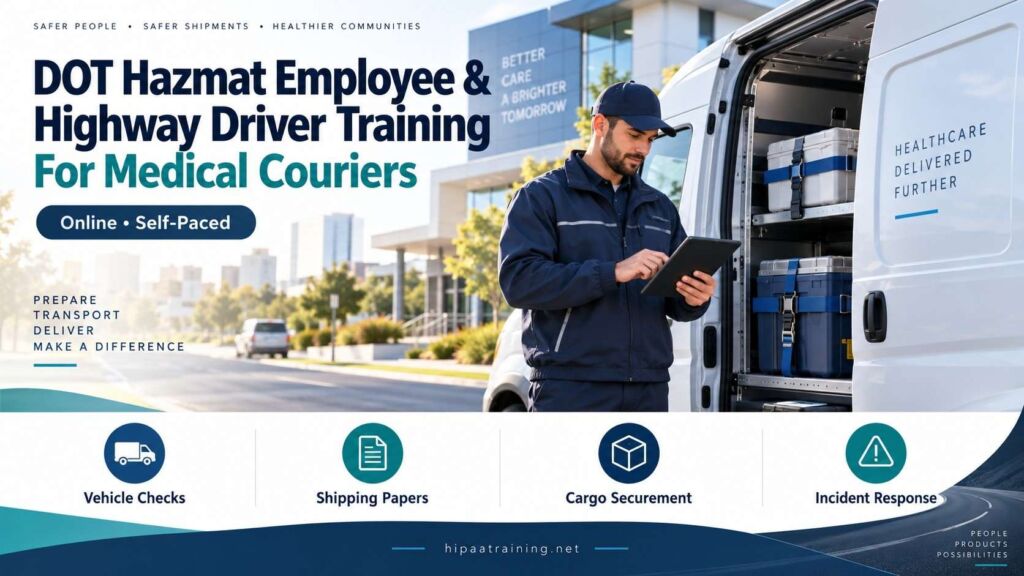
A medical courier driver is responsible for more than the packages in the vehicle. The driver must also consider the vehicle’s condition, how cargo is secured, where required documents are kept, which route is approved, and what to do if the trip is interrupted.
DOT Hazmat Employee and Highway Driver Training brings those responsibilities together for medical couriers transporting primarily non-bulk hazardous materials by highway.
Price: $25 Format: Online, self-paced Course length: 1 Hour 5 Minutes Assessment: 10 questions; 80% passing score Certificate: Downloadable PDF course completion certificate Designed for: Medical courier drivers and personnel with assigned highway hazmat duties Course Access: 2 months or course completion, whichever comes first. No access after course is completed.
The course covers hazmat employee training topics under 49 CFR 172.704 and highway driver instruction under 49 CFR 177.816. Learners apply those topics to vehicle checks, prepared packages, shipping papers, loading, driving, delivery, and incident response.
Learners review:
Hazardous materials marks, labels, and shipment information
Package condition and acceptance checks
Vehicle and cargo-area readiness
Shipping papers and emergency response information
Loading, separation, and cargo securement
Highway driving and applicable route restrictions
Parking, vehicle attendance, and shipment security
Breakdowns, collisions, leaks, and other emergencies
What will a driver be able to do after training?
After completing the course, a learner should be able to check a prepared shipment and vehicle before departure, recognize when a document or package needs review, secure cargo for the trip, and follow the employer’s transportation procedures.
The driver should also know when to stop work and request help. A leaking package, a missing required shipping paper, or a shipment that cannot be secured safely should be resolved before the route continues.
Why is highway driver training separate from general hazmat awareness?
General hazmat awareness helps an employee recognize transportation hazards. A driver also makes decisions about the vehicle and the trip. Those decisions include keeping required documents available, checking cargo securement, following applicable route rules, protecting the vehicle at stops, and responding if an incident occurs.
DOT identifies driver training as a training component for hazmat employees who operate motor vehicles. The employer must match that instruction to the driver’s actual duties.
Who should take this course?
This course is intended for medical courier drivers, contracted drivers, independent couriers, owner-operators, and route supervisors who operate vehicles carrying regulated hazardous materials by highway. Employees who load or handle those shipments may also need training related to their assigned functions.
A job title alone does not determine the requirements. The employer must evaluate what the worker does and what the vehicle transports.
How does this course differ from core DOT hazmat employee training?
Core hazmat employee training addresses hazard recognition, safety, security awareness, and the employee’s assigned transportation functions. This course also addresses the work of operating a vehicle carrying regulated hazardous materials, including vehicle readiness, cargo securement, route rules, parking, breakdowns, and incidents during transport.
Employers should select training based on the worker’s duties and add instruction for specific materials when required.
No. Training requirements depend on the materials transported and the driver’s actual functions. An employer should review the assignments before deciding which DOT training applies.
No. Requirements vary by material and any applicable exception. When shipping papers are required, the driver must know where to keep them and how to make them available under the applicable procedure.
No. This course covers broader hazmat employee and highway driver responsibilities. Separate training may be needed for UN3373 biological substances, UN1845 dry ice, UN3291 regulated medical waste, compressed gases, or other assigned shipments.
No. The employer must identify the driver’s assigned functions, provide any additional training and procedures, complete the required testing, and maintain the training record. A course completion certificate does not authorize a driver to transport every material in every vehicle or on every route.
Federal DOT hazmat employee training is generally required at least once every three years. A change in job duties may call for additional training sooner.
Prepare for the whole trip
Safe hazmat transportation begins before the driver starts the engine and continues through the final handoff. Train medical couriers to assess the vehicle and shipment, protect documents, secure cargo, follow the assigned route, and respond when a trip does not go as planned.