A medical courier plays a critical role in the healthcare system by transporting medical specimens, pharmaceuticals, medical records, and sensitive healthcare materials between hospitals, laboratories, clinics, pharmacies, and diagnostic centers. Medical courier services must follow strict healthcare privacy and safety regulations, including HIPAA compliance, infection control practices, and proper specimen transport procedures.
This page provides a complete roadmap for becoming a medical courier. Whether you want to work for a courier company, operate as an independent contractor, or build your own medical courier business, the resources below guide you through each step of the journey.
The process typically includes:
Completing foundational medical courier training
Understanding healthcare compliance and specimen transport procedures
Learning how to find medical courier jobs
Building a professional courier workflow or launching a courier business
The sections below explain each step and provide links to detailed resources and training.
Step 1: Medical Courier Certification Training Package
The first step toward becoming a professional medical courier is completing structured training that prepares you for healthcare logistics, specimen transport, and compliance responsibilities.
Our Online Medical Courier Certification Training Package provides a comprehensive foundation for individuals entering the medical courier field. The package includes seven core courses plus two optional specialized courses that expand your expertise in handling sensitive medical materials.
.
The seven core courses are:
.
HIPAA Privacy and Security Training for Business Associate (Medical courier are Business Associate)
OSHA: Bloodborne Pathogens (BBP) Training
OSHA: Hazard Communication (HazCom) Training for Medical Couriers (meet DOT Compliance)
OSHA: Medical Courier Specimen Handling, Collection and Transportation Best Practices
OSHA: Workplace Fire Safety Training for Employees
Sexual Harassment Prevention Training
CyberSecurity Awareness Training
Optional specialized courses include:
Chemotherapy & Hazardous Drugs Safe Handling Training
Infection Control Training
These additional courses help couriers understand how to safely transport high‑risk medical materials and follow strict healthcare safety protocols.
Completing this training helps students understand the expectations of hospitals, laboratories, and healthcare logistics providers.
Many students have questions about how the medical courier training works, what type of jobs are available, and whether prior experience is required.
The Medical Courier Training Package FAQ answers common questions such as:
Do I need a license to become a medical courier?
What type of vehicle is required?
Can I work as an independent contractor?
How long does the training take to complete?
What skills do employers expect from medical couriers?
The FAQ section also explains how the training prepares students for real‑world courier work and how it fits into the broader healthcare logistics industry.
Once you understand the operational side of medical courier work, the next step is learning how to turn that knowledge into income. Some individuals prefer to work as drivers for courier companies, while others want to operate their own courier business.
The 6-hour Medical Courier Business Builder Training teaches students how to launch and manage a medical courier operation. This course focuses on business setup, operational planning, marketing, and building relationships with healthcare clients.
One of the most valuable features of this program is the included Resource Pack. Students receive more than 70 ready‑to‑use business resources in Microsoft Word and Excel formats. These templates help simplify the process of starting and managing courier operations.
The resource pack includes tools such as:
Contract templates
Client outreach templates
Route planning worksheets
Business planning documents
Pricing calculators
Operational tracking spreadsheets
These resources allow students to implement what they learn immediately and reduce the time required to build systems from scratch.
Step 4: Step‑by‑Step Guide to Find Medical Courier Jobs
After completing training, many students want to know how to find medical courier jobs. Healthcare courier positions exist across hospitals, diagnostic laboratories, pharmacy delivery networks, blood banks, and healthcare logistics companies.
Our Step‑by‑Step Guide to Finding Medical Courier Jobs in the United States explains how to identify opportunities and approach employers.
This guide covers topics such as:
Where medical courier jobs are typically posted
Search keywords that help find the right job listings
How to prepare a professional courier resume
How to contact laboratories and courier companies directly
Tips for interviews and onboarding
Following a structured job search strategy significantly improves the chances of securing consistent courier work.
Healthcare organizations depend on reliable medical transportation to move specimens and medical materials quickly and safely. Hospitals, labs, diagnostic centers, and pharmacies rely on trained couriers who understand compliance requirements and specimen handling protocols.
Demand for medical courier services continues to grow due to:
Expansion of laboratory testing services
Increased demand for home healthcare services
Growth of specialty pharmacy distribution
Need for rapid specimen transport between facilities
This demand creates opportunities for both employed couriers and independent medical transportation providers.
Complete Roadmap to Becoming a Medical Courier
If you want to enter the medical courier field, follow this roadmap:
Complete the Medical Courier Certification Training Package
Review the Medical Courier Training FAQ
Learn how to start or scale courier operations with the Business Builder Training
Use the Step‑by‑Step Job Guide to begin finding courier opportunities
This structured pathway helps students move from training to real income opportunities in the healthcare transportation industry.
Why Choose Our Medical Courier Training Bundle?
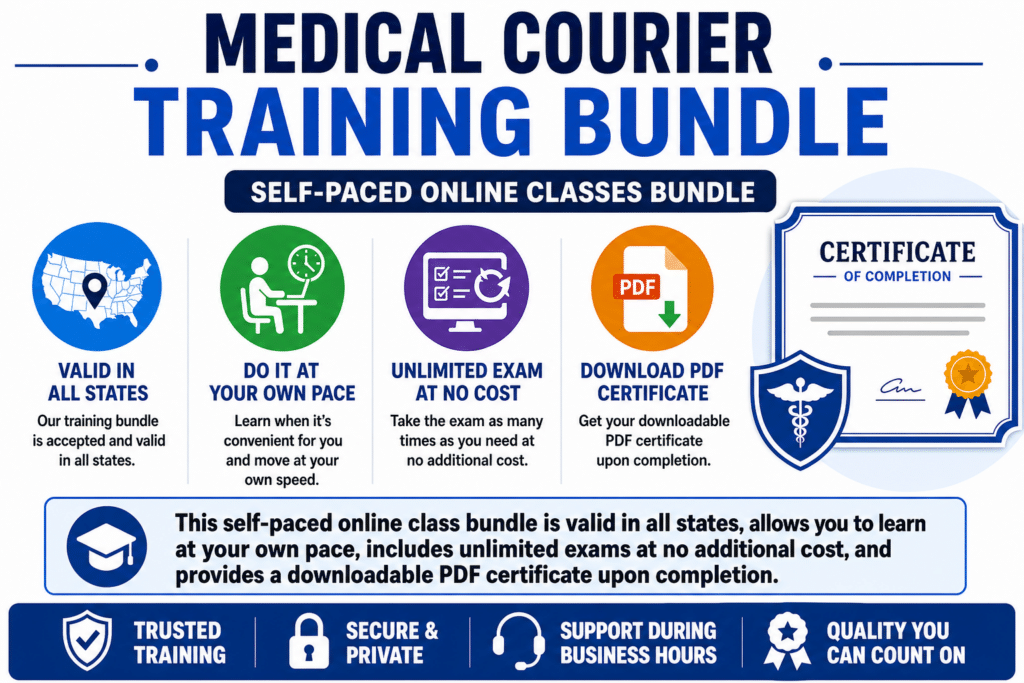
1. Self-paced online classes 2. Valid in all states 3. Learn at your own pace 4. Unlimited exams (no extra cost) 5. Downloadable PDF certificate
This self-paced online class bundle is valid in all states, allows you to learn at your own pace, includes unlimited exams at no additional cost, and provides a downloadable PDF certificate upon completion.