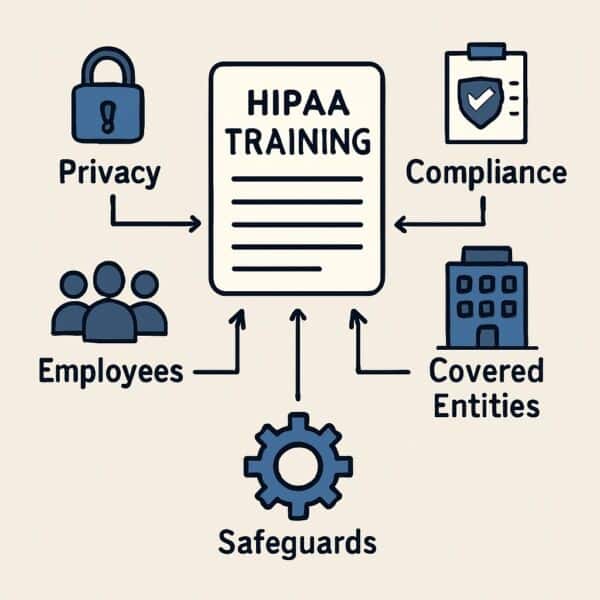
HIPAA Training Requirements: What Every Organization Needs to Know to Stay Compliant
HIPAA Training Requirements: What Every Organization Needs to Know to Stay Compliant
The Health Insurance Portability and Accountability Act (HIPAA) sets clear standards for protecting Protected Health Information (PHI). One of the most critical components of HIPAA compliance is HIPAA training—a legal requirement for organizations handling PHI. Without it, you risk regulatory fines, reputational damage, and patient mistrust.
In this guide, we break down HIPAA training requirements, who needs it, what it must include, and how to stay compliant.
Who Needs HIPAA Training?
Under HIPAA, the training requirement applies to:
Covered Entities (CEs): Healthcare providers, health plans, and healthcare clearinghouses.
Business Associates (BAs): Third-party vendors that handle PHI, such as billing companies, transcription services, and IT providers.
Workforce Members: Employees, contractors, volunteers, and interns with access to PHI or electronic PHI (ePHI).
HIPAA Privacy Rule Training
The HIPAA Privacy Rule requires:
Training for all new workforce members upon hire.
Updates whenever privacy policies or procedures change.
Clear understanding of PHI, patient rights, and permitted disclosures.
HIPAA Security Rule Training
The HIPAA Security Rule focuses on protecting ePHI and requires:
Security awareness training for workforce members handling ePHI.
Best practices for password management, encryption, and secure communication.
Ongoing sessions to address evolving cybersecurity threats.
Recommended HIPAA Training Topics
Understanding PHI and ePHI
Administrative, technical, and physical safeguards
Breach notification rules
Social engineering and phishing prevention
Incident reporting procedures
HIPAA Training Frequency
While the law doesn’t specify exact frequency, annual HIPAA training is considered best practice. Additional sessions should be conducted when:
Regulatory updates occur
A data breach happens
New systems or technologies are introduced
Documenting HIPAA Training
Maintain records of:
Training dates
Attendee names and roles
Topics and materials covered
Proper documentation is critical for HIPAA compliance audits.
Consequences of Non-Compliance
Civil penalties up to $50,000 per violation
Criminal charges for willful neglect
Loss of patient trust and potential business contracts
Final Thoughts
HIPAA Training is not optional—it’s a compliance cornerstone. By implementing regular, well-documented training sessions, organizations can meet HIPAA requirements, reduce risk, and protect sensitive health data.